


Have a standard deck of cards but can’t quite remember the rules to Go Fish? You’ve come to the right place. These simple, argument-proof instructions will get you playing in minutes, and all you need is that one 52-card deck—just be sure to take out any jokers before you begin. To know more, check out DORY189
The Go Fish setup is beautifully simple, which is why it’s a favorite among card games for young children and adults alike. It works perfectly for a quick two-player match but easily expands to accommodate groups of up to six people, making it a classic choice for family game night. The goal isn’t complicated, but it all starts with understanding one key idea.
The single most important term in Go Fish is “rank.” A card’s rank is simply its value—for example, all four 7s are one rank, and all four Queens are another. This is crucial because on your turn, you won’t ask for a specific suit but for all cards of a certain rank. Mastering this concept is the key to playing the game correctly.
How to Set Up the Game: Dealing Cards and Creating the “Ocean”
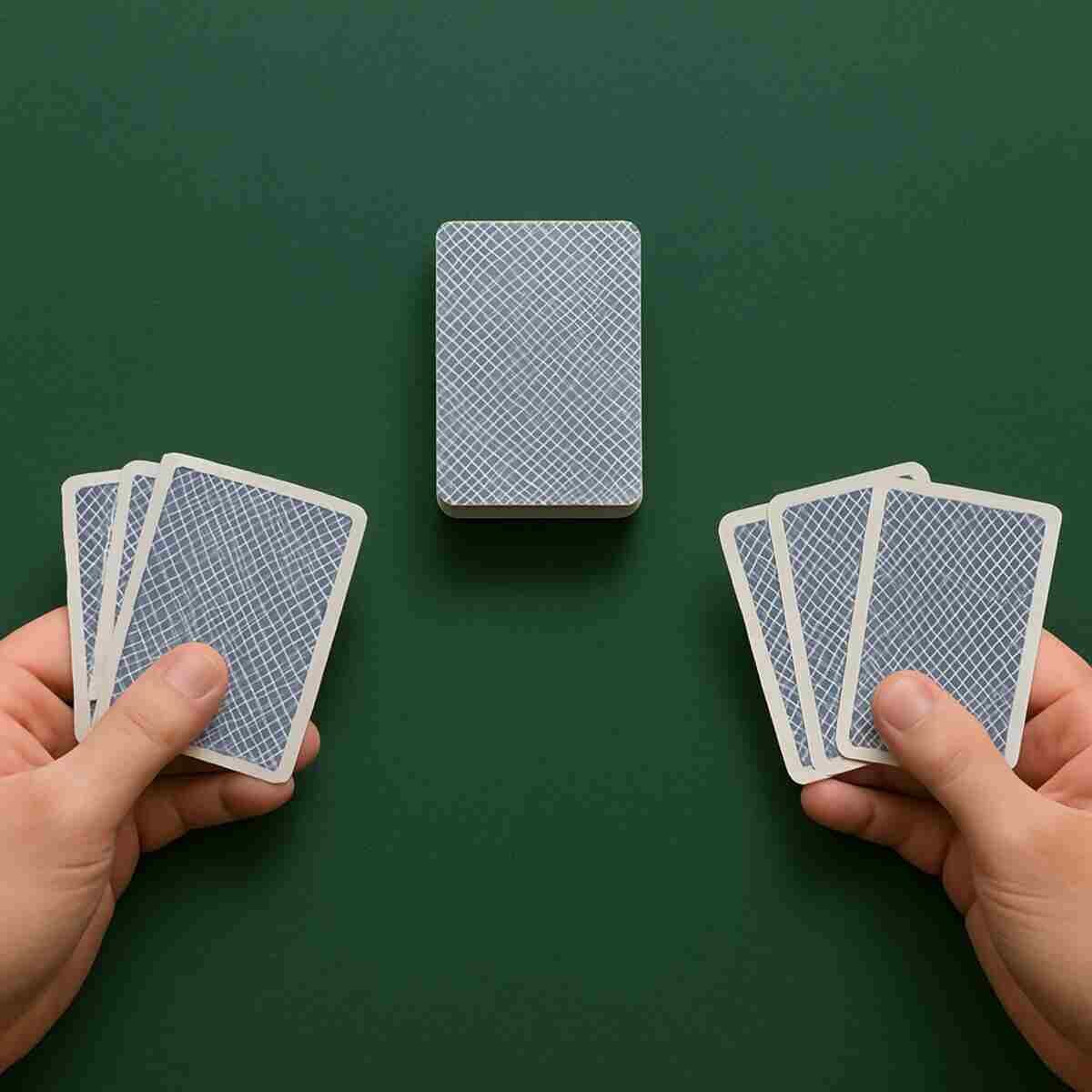
Getting your game started is simple. First, choose one person to be the dealer. After shuffling the deck well, the dealer passes out cards one at a time, face down. Everyone can look at their own cards, but remember to keep them a secret from the other players!
The number of cards each person gets depends on the size of your group, and it’s an easy rule to remember:
- For 2 to 3 players: Deal 7 cards each.
- For 4 or more players: Deal 5 cards each.
What about the leftover cards? Just stack them neatly in a face-down pile in the center of the play area. This stack is called the “Ocean,” and it’s where you’ll draw from when you have to “Go Fish.” Make sure nobody peeks at the cards in the Ocean—that’s the whole point of fishing! With everyone’s hands dealt and the Ocean ready, you’re set to begin.
The Core of Go Fish: How to Take Your Turn Step-by-Step
Once the cards are dealt, the player to the left of the dealer takes the first turn. The entire game is built around a simple sequence of asking for cards. The most important part of these Go Fish rules is this: you must have at least one card of a rank to ask for it. For example, you can only ask another player for Kings if you are already holding a King in your hand.
Your turn always follows a straightforward, three-step process. Here’s exactly how to play Go Fish for beginners, broken down moment by moment:
- Ask for a Card: Pick one opponent and ask them clearly for a specific rank you hold. You might say, “Sarah, do you have any 7s?” You cannot ask a general question like, “Do you have any face cards?”
- Get a Match & Go Again: If Sarah has any 7s, she must give all of them to you. Because your request was successful, you get to take another full turn and ask any player for another card.
- “Go Fish!”: If Sarah doesn’t have any 7s, she’ll say, “Go Fish!” You must then draw the top card from the Ocean pile.
That “go again” rule is a key part of the Go Fish card game instructions. As long as you keep getting the cards you ask for from other players, your turn continues. You could successfully ask three different players for cards before your turn finally ends.
Your turn officially ends only when an opponent tells you to “Go Fish” and the card you draw from the Ocean is not the rank you just asked for. Keep that newly drawn card in your hand. Play then passes to the player on your left. But what happens if you get lucky and draw the exact card you asked for? That’s where the fun really begins.
What “Go Fish!” Actually Means and the “Lucky Draw” Rule
That iconic shout of “Go Fish!” is more than just the name of the game—it’s a direct command. When you ask an opponent for a card they don’t have, they will tell you to “Go Fish!” This sends you to the “Ocean” (the face-down draw pile) to pick up a single card from the top of the deck. Most of the time, this simply ends your turn. You add the new card to your hand, and play continues with the person to your left.
However, every so often you get a lucky break. If the card you draw from the Ocean happens to be the exact rank you just asked for, you’ve hit a “Lucky Draw!” For instance, you asked for Jacks and happened to draw a Jack. You must immediately show this card to all the other players as proof of your good fortune.
This special moment comes with a big reward: you get to take another full turn. You can immediately ask any player for another card you hold. But if the card you draw from the Ocean is not the one you asked for, you simply add it to your hand quietly. Your turn is over. As you start collecting more cards through asking and fishing, you’ll soon be ready to score your first points.
How to Make a “Book” and Secure Your Points
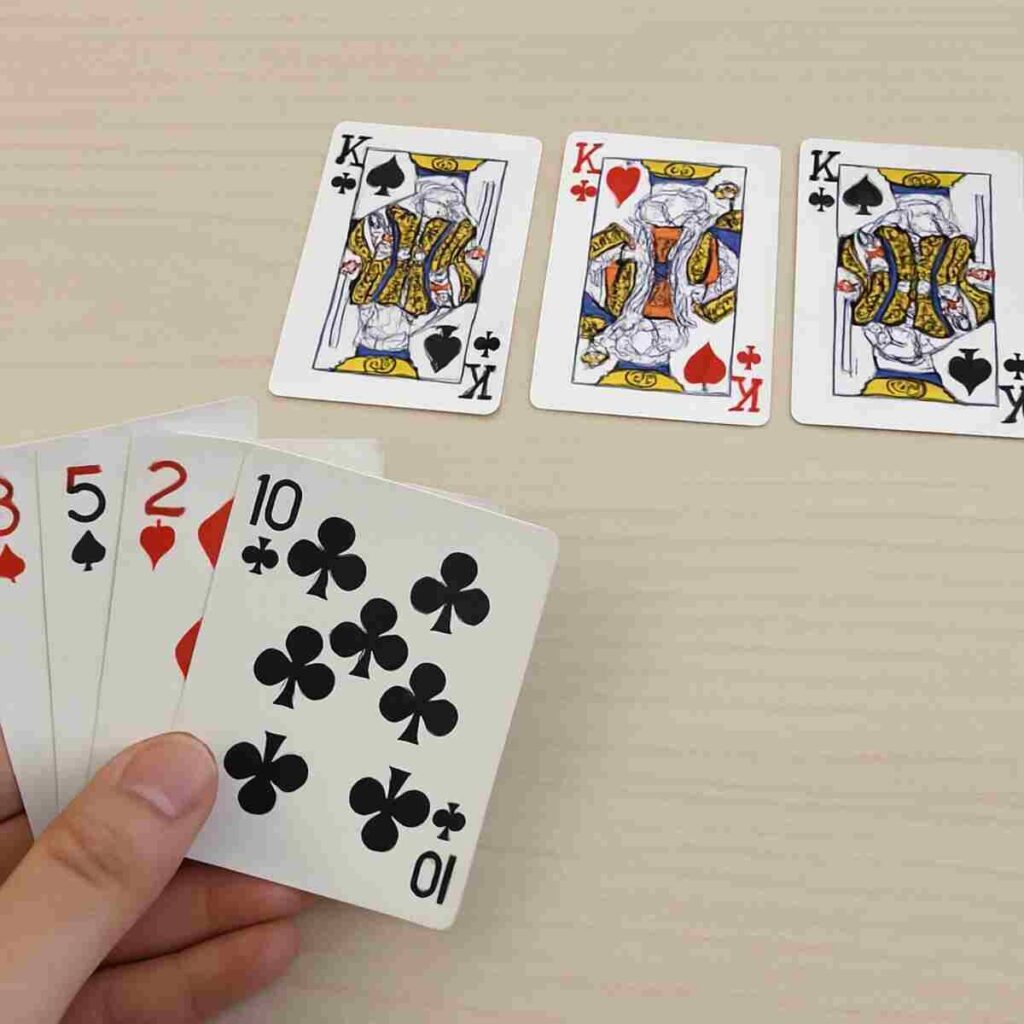
So, what happens when all that asking and fishing finally pays off? Eventually, you will collect all four cards of the same rank—for instance, all four 3s or all four Jacks. In Go Fish, this complete set of four is called a “book.” Making these books is the entire point of the game.
The instant you have a complete book in your hand, you must show it to the other players to prove you have it. After showing it, place the four cards face-up on the table in front of you. It doesn’t matter how you got that fourth card; a book must be declared immediately. Once on the table, these cards are safe and can no longer be asked for by other players.
These completed books on the table are how you score. Each book counts as one point, and your goal is to collect more of them than anyone else. Keep an eye on what you’re collecting, because every book you make gets you one step closer to winning the game.
How Do You Win? Knowing Exactly When the Game Ends
The game continues with players asking for cards and making books until all 13 possible books have been successfully claimed and laid on the table. When the last book is made (all four Aces, all four 2s, and so on, up to Kings), the game is instantly over.
There’s also another way the game can finish. If the draw pile (the “ocean”) runs out of cards and a player gets rid of the last card in their hand, the game stops immediately. This can happen if they make a book or if an opponent asks for their last card. This rule cleverly prevents the game from getting stuck when no one can make a move.
Once the game has ended one of these two ways, it’s time to find the winner. The scoring couldn’t be simpler: each player counts the number of books they’ve collected. The player with the most books wins! Any cards left over in players’ hands don’t matter at all for the final score.
The Most Common Rule Dispute: Can You Ask for a Card You Don’t Have?
Related Posts
If there’s one argument that pops up during a game of Go Fish, this is it. One player insists you can ask for any card you want (a “bluff”), while another says you can’t. In a standard game, the answer is definitive: you must have at least one card of the rank you are asking for. For example, to ask another player for their Kings, you must already be holding at least one King in your own hand.
This “must-have-to-ask” rule is what gives Go Fish its simple strategy. It prevents players from just taking wild stabs in the dark, hoping to get lucky by guessing “Aces?” on their first turn. Instead, the rule forces you to pay attention to what cards other players are asking for, helping you remember who might be collecting which sets. It turns a game of pure chance into a simple game of memory and deduction.
So why do so many people remember being able to bluff? This is a classic case of a “house rule.” Many families and groups develop their own variations over time, and allowing bluffing is a very popular one. There’s nothing wrong with playing that way if everyone agrees beforehand! However, if you are playing by the standard, official rules, you can’t ask for a card you don’t possess.
What Happens If You Run Out of Cards (But the Game Isn’t Over)?
It’s bound to happen eventually: another player asks for your last card, and just like that, your hand is empty. Does this mean you’re out of the game? Not at all! Running out of cards is a normal part of Go Fish, and there’s a simple rule for how to handle it. You are still in the game as long as there are cards left in the “ocean” to draw from.
The rule for beginners is straightforward: if you start your turn with zero cards in your hand, you immediately draw a new hand. Simply take the same number of cards you started the game with (typically five or seven) from the top of the ocean. This action of drawing your new hand completes your turn; you don’t get to ask for a card. Play then continues with the person to your left.
This special draw is what keeps players in the game until the ocean itself runs dry. Remember, this only applies if the ocean still has cards. If you run out of cards and the ocean is also empty, the game is officially over. Knowing these specific rules keeps things fair and fun.
How to Win at Go Fish: Three Simple Strategies
Once you have the rules down, you might think this fun family card game is all about the luck of the draw. While luck is certainly part of the fun, a little bit of strategy can make you a much better player and give you a real edge. Moving beyond simply asking for cards you need, you can start playing with a plan.
The single most powerful tool you have in Go Fish is your memory. Every time a player asks another for a card, they are giving you a huge clue: they have at least one card of that rank! For example, if your sister asks your dad for Queens, you should immediately make a mental note. You now know she is trying to collect Queens, and you also know your dad doesn’t have any if he tells her to “Go Fish.”
This information helps you make smarter decisions on your turn. If you have a Queen, who should you ask? Your sister, of course! You already know she has at least one. On the other hand, if a player just asked for 8s and was told to “Go Fish,” asking them for 8s on your next turn is a complete waste of time. Prioritize asking for ranks you already have two or three of, as this is the fastest way to make a book.
The best strategy for how to win at Go Fish is less about the cards you’re dealt and more about how well you pay attention. Keep these three tips in mind:
- Remember What Others Ask For: Every question is a piece of information about an opponent’s hand.
- Target the Right Player: Use that information to ask someone who you know has the card you need.
- Build on Your Pairs: Focus on asking for cards that will help you complete a book you’ve already started.
Fun Go Fish Variations to Make the Game New Again
The beauty of a simple game like Go Fish is how easy it is to change the rules to fit your group. While the standard version is a classic, you’re not stuck with it! Whether you need a simpler game for young kids or a tougher challenge for adults, these Go Fish card game variations can make an old favorite feel brand new.
Each of these twists changes one small part of the game, but it can make a big difference in how you play. They are perfect for keeping everyone engaged, no matter their age or skill level.
Here are three of the most popular ways to mix things up:
- Pairs Go Fish: This is a fantastic easy version for playing with younger kids. Instead of needing all four cards to make a book, you only need a pair of two matching cards. The game moves much faster, and the frequent “wins” keep little ones excited.
- Specific Suit Go Fish: To add a serious memory challenge, players must ask for a specific card, including its suit (e.g., “Do you have the King of Hearts?”). If the opponent has other Kings but not the King of Hearts, the answer is still “Go Fish!”
- Team Go Fish: Playing with four or six people? Split into teams of two. You play as individuals but cannot ask your partner for cards. When the game ends, partners combine their collected books, and the team with the most wins.
Feel free to mix and match these ideas—like playing Team Go Fish with the Pairs rule for a fun, fast-paced family game. Experimenting is half the fun.
Go Fish vs. Old Maid: What’s the Real Difference?
Both Go Fish and Old Maid are staples of family game night, but their core goals are complete opposites. In Go Fish, your mission is to collect sets of four matching cards—you win by building up the most “books.” Conversely, Old Maid is a game of avoidance. The goal is to get rid of all your cards by making pairs, and you lose if you’re the one left holding the unlucky Old Maid card at the end.
This difference in goals creates two very different ways to play. Go Fish involves memory and a bit of strategy, as you have to remember who might have the cards you need and actively ask for them. Old Maid, on the other hand, relies almost entirely on luck. Players blindly draw a random card from their neighbor’s hand, hoping they don’t pick the one card that can’t be paired.
Ultimately, the choice between Go Fish vs. Old Maid comes down to what you’re looking for. Go Fish is a fantastic first step into games with light strategy, making it perfect for kids ready for a small challenge. Old Maid’s pure chance and simple pairing make it an excellent, no-stress option for even the youngest players.
You’re Ready to Play! A 60-Second Go Fish Rulebook
With these instructions, you’re not just ready to play—you’re ready to teach. You can confidently deal a hand, explain what a “book” is, and guide your friends or family through a full game from start to finish.
For a quick reference during your first round, here is the 60-second rulebook:
- Deal 5-7 cards. Rest go in the ‘ocean‘.
- On your turn, ask one player for a rank you hold.
- If you get it, go again. If not, ‘Go Fish!’ (draw one card).
- Got all four of a rank? Show your ‘book’ and put it down.
- Game ends when all books are made or the ocean is empty. Most books wins!
That’s everything you need. The next time someone is looking for a fun, simple game, you have the answer. Go Fish is no longer just a classic you half-remember, but a game you can lead. Now, shuffle the deck and have fun!
